Carbon Offsetting – The Key to Achieving Global Carbon Neutrality?



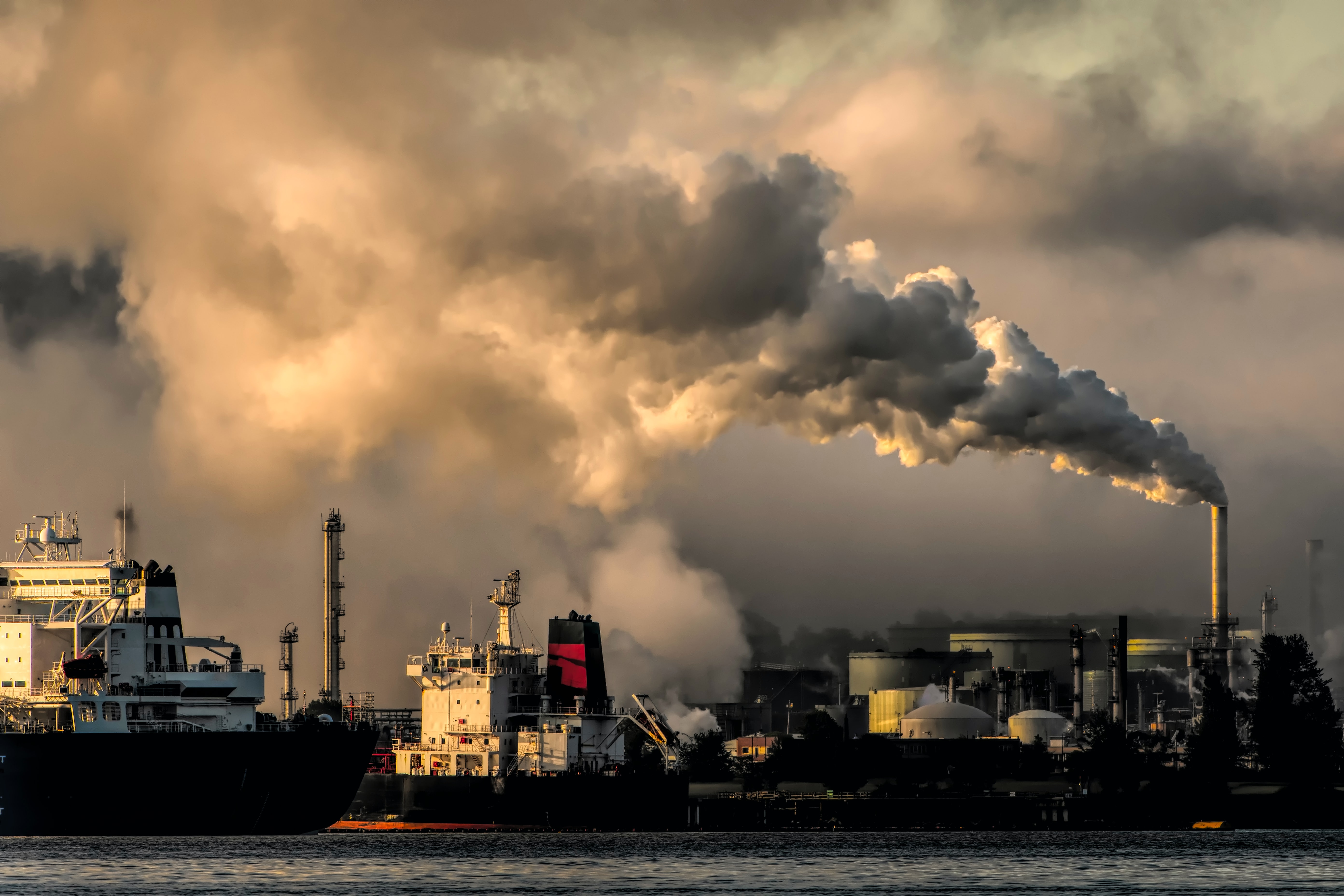
More and more CO2 is being released into the atmosphere, which in turn has a negative impact on the climate. As a result of human activity, greenhouse gas concentrations are increasing. The natural greenhouse effect is necessary for life, but the increase in greenhouse gas concentrations in the atmosphere provides an additional greenhouse effect (cf. 1). According to the German government, CO2 emissions should be only 563 million metric tons in 2030, so according to the Umweltbundesamt, annual reductions must be more than tripled. Since we are aiming for greenhouse gas neutrality to a large extent by 2050, the reduction must even be increased sevenfold (cf. 2).
The first efforts for climate protection measures appeared within the framework of the United Nations Framework Convention on Climate Change (UNFCC) in December 1997. In the process, an additional protocol was drawn up with the aim of decelerating climate change through climate protection measures. The resulting Kyoto Protocol (which entered into force in 2005) included clear rules on how greenhouse gases should be reduced. However, these rules only applied to industrialized countries. In 2020, the commitment period ("Kyoto II") was not extended, so the Protocol was replaced by the Paris Climate Agreement.
Regulated carbon market vs. voluntary market
There are two different market-based approaches to encourage companies to decarbonize. Companies that act in a particularly polluting way fall under the so-called regulated carbon market and have to meet a CO2 emission quota. In addition, companies can also voluntarily contribute to avoiding and reducing carbon emissions to offset their footprint. In the voluntary market, companies, institutions and individuals can purchase emission reduction certificates, thereby offsetting their emissions (cf. 7).
Continuously, reference is made to the voluntary market.
What can be done to achieve greenhouse gas neutrality?
In order to become climate neutral, the UN recommends first measuring the CO2 footprint, then reducing it and subsequently offsetting the emissions that cannot be avoided (cf. 3).
Reducing emissions is the most effective way to mitigate the effects of climate change. For example, investing in energy efficiency measures or switching to renewable energy sources can help reduce emissions. The Science-Based Target Initiative has drafted guidelines to help companies consistently cut CO2. You can read more here.
Nevertheless, in some cases it is still not possible to completely avoid emissions and therefore offsetting can be seen as a way to neutralize residual emissions.
A carbon offsetting thus pursues the basic idea of creating a carbon compensation. Companies calculate their CO2 emissions and want to offset them through climate projects. It should not be forgotten that CO2 compensation through offsetting takes place at a different location, meaning that the company's own emissions do not change. This method represents a popular and valid first step in making one's own climate goals visible within the company, but CO2 reduction must be thought of much more comprehensively. Therefore, carbon offsetting should not be seen as a substitute for emissions reduction.
Offsetting as a tool for CO2 reduction?
Offsetting greenhouse gas emissions can be a valuable tool for meeting emissions reduction targets and thus contributing to global carbon neutrality. However, organizations that view carbon offsets as a substitute for reducing emissions, rather than using them as a supplement, may misuse the tool for greenwashing purposes (see article on greenwashing here).
Companies, institutions and private individuals can therefore support certified emission reduction projects that either absorb or reduce CO2 emissions. One carbon credit corresponds to one ton of CO2 absorbed or reduced by the projects.
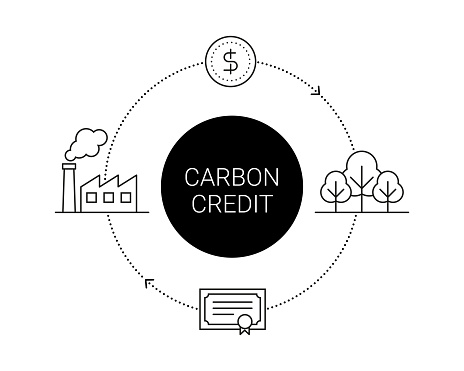
The carbon credit reflects not only the CO2 reduction capacity of the project in question, but also other ecosystem services such as biodiversity protection, social benefits, and the contribution to the United Nation's Sustainable Development Goals (see article on SDGs) that the project provides. This is the "voluntary offset" and thus stakeholders have freely chosen the offset method. However, the voluntary offset market is not regulated internationally, i.e. there are no uniform, internationally recognized standards.
Following the guidelines of the Net Zero Initiative, "carbon offset" has been replaced by the terminology of climate contributions. This is because carbon offsetting has a negative connotation because offsetting suggests unfavorable behavior, and furthermore there is no standard definition. The risk of greenwashing accusations are even higher.
Climate contributions, on the other hand, support sustainable projects with a positive impact on the environment and they contribute to global carbon neutrality. Hence, climate contributions are an effective way to achieve net zero emissions on a global scale.
As mentioned earlier, projects supported by climate contributions go beyond carbon absorption or avoidance and also achieve other environmental and social impacts. For example, benefits are created for health, biodiversity, gender equality, and economic development (cf. 5).
The recent report of the Science-based Targets Initiative (SBTi) highlights the important role of offsetting and neutralization (carbon offsets) to transition to net-zero emissions, but nevertheless they do not replace the need to reduce emissions in the value chain in line with science. Thus, offsets must be combined with a viable and effective emissions reduction measure (cf. 4).
How should an offset project be selected?
WWF has provided some criteria that should be considered when selecting projects (cf. 6):
- Specific: each carbon credit must legitimately measure a ton of CO2 absorbed or avoided by the project.
- Measurable: the carbon credit must be calculated based on sound scientific data and verifiable methodologies.
- Additional: the emissions reductions or removals would not occur without the additional incentive provided by the carbon market.
- Permanent: Emission reductions achieved through carbon credits cannot be reversed once the credit is issued.
- Avoidance of carbon leakage: Carbon credit generation must not result in emissions elsewhere.
- Credible: Projects must be monitored, reported, and verified through third-party verification systems.
- Social and environmental safeguards: They must not violate laws, regulations, or treaties and must comply with international best practice standards for social and environmental safeguards.
Conclusion – Measure, reduce, compensate and communicate
In summary, continuous reduction of emissions must always come first, as this is the most effective way to mitigate the effects of climate change. Offsetting, on the other hand, helps neutralize residual emissions. It is important to note that offsetting emissions is not a one-time solution, but an ongoing process. Organizations should regularly measure and offset their emissions to ensure they are contributing to global carbon neutrality. While offsetting is a promising solution to the problem of greenhouse gas emissions, it is still not without controversy. Critics argue that offsetting emissions can lead to the creation of greenwashing, where emissions reductions are claimed but not real, and that offsetting emissions can be used by companies to avoid reducing their emissions.

However, by investing in high-quality, certified offset projects, organizations can ensure that their offset efforts are genuine and contribute to global carbon neutrality. An offset strategy must always be communicated accurately and precisely. In this context, a transparent communication strategy is essential. Terminology is crucial here and therefore terminology such as "carbon offset" or "compensation" should be avoided and replaced by "climate contribution" so that the component of additionality is clear.
All of us, but especially high-emitting companies, have an important role to play in the transition to a carbon-free world. This goal is inevitable in order to provide a future on earth for future generations.
____________________________________________________________________________________________________________
[1] https://www.umweltbundesamt.de/themen/klima-energie/klimawandel/klima-treibhauseffekt#grundlagen
[3] https://unfccc.int/climate-neutral-now
[4] https://sciencebasedtargets.org/resources/legacy/2020/09/foundations-for-net-zero-full-paper.pdf
[5] https://climateseed.com/carbon-offsetting-guide?hsLang=en