The Sustainable Developement Goals


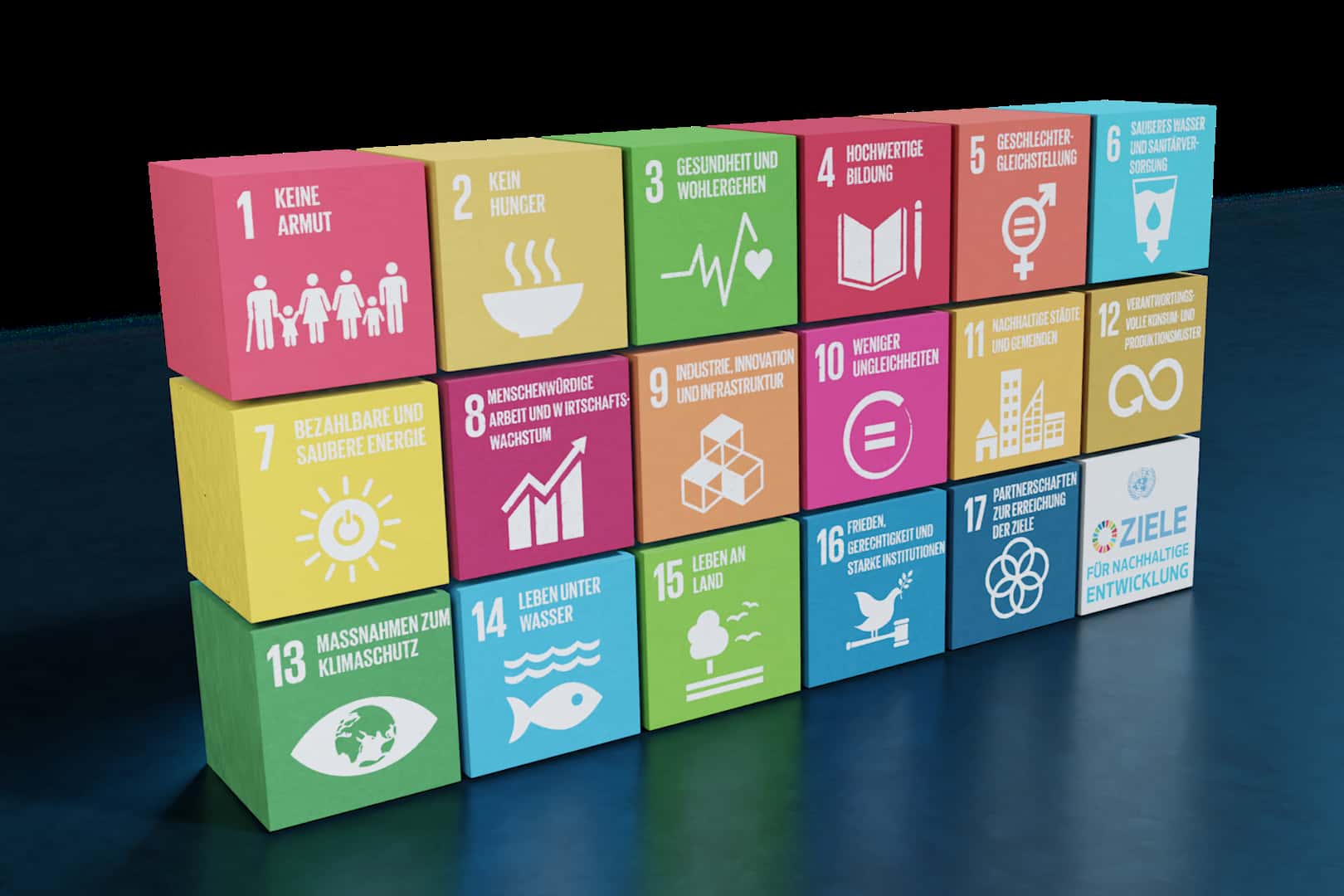
The areas are diverse and the potential is great. This is recognized internationally. 17 goals have been adopted to contribute to the shift to a sustainably oriented economy - the Sustainable Development Goals.
The Sustainable Development Goals
In addition to specific EU regulations already in place, there are ambitions that extend beyond the borders of the European continent. Since 2015, there has been an international framework that actively addresses many of the global challenges: the so-called Sustainable Development Goals (SDGs) of the United Nations.
These are environmental, social and economic sustainability goals to be achieved worldwide by 2030. They were adopted as part of the 2030 Agenda. The scope ranges from the fight against poverty and hunger to sustainable economic growth and the protection of natural resources. A broad spectrum is represented that covers and involves all dimensions of sustainability.
"The Sustainable Development Goals are more important today than ever before. Now is the time to ensure the well-being of people, economies, societies and our planet." – António Guterres, Generalsekretär der Vereinten Nationen.

History of the SDGs
The 17 goals call for urgent action by all countries in a global partnership. The common approach to peace and prosperity for people and planet has been adopted by all member states of the United Nations.
Parts of the reasoning behind the SDGs were already set out in Agenda 21 in 1992. These were adopted by over 178 countries at the Earth Summit in Rio de Janeiro, Brazil that same year. Here, too, a basic action plan was established to build a global partnership for sustainable development, pursuing the goals of environmental protection and humane social standards.
Then in 2000, the Millennium Summit was held in New York. Eight Millennium Development Goals (MDGs) were set to reduce extreme poverty by 2015.
The World Summit on Sustainable Development in South Africa in 2002 was also based on both Agenda 21 and the Millennium Declaration. The relevance of multilateral partnerships was again emphasized.
In 2012, at the United Nations Conference on Sustainable Development (Rio+20) in Rio de Janeiro, Brazil, a final document entitled "The Future We Want" was signed and adopted by the member states. This document established a development process of a set of SDGs based on the Millennium Declaration. Subsequently, a 30-member open-ended working group developed proposals for the SDGs in 2013.
Ultimately, however, 2015 marked the year of significant change. Resolved was an agreement essential to multilateralism and the design of progressive and sustainable international policy. The following was established:
- Sendai-Rhamen Program for Disaster Risk Reduction (here)
- Addis Ababa Action Plan on Financing for Development (here)
- The 2030 Agenda for Sustainable Development, with its 17 SDGs, at the UN Sustainable Development Summit in New York (here)
- Paris Agreement on climate change (here)
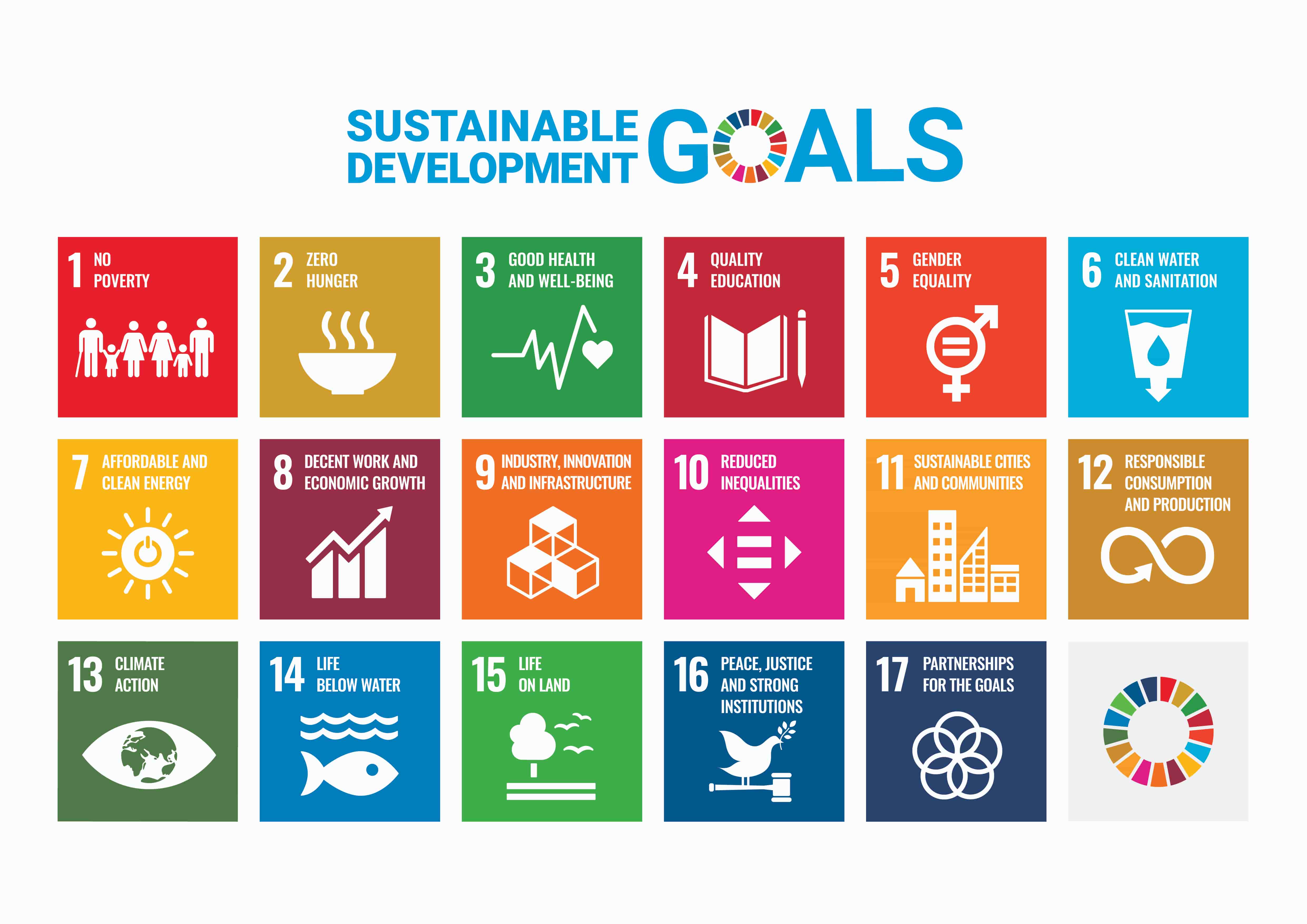
The 17 SDGs and their 169 sub-goals establish a system of targets that is valid for all countries and is intended to lead to an improvement in economic, ecological and social living conditions by the year 2030. In practice, countries themselves determine the level of ambition to be pursued and how the goals are ultimately to be implemented, according to their starting position and requirements.
Current status of the SDGs
Based on the actions taken so far, no significant successes can be prescribed with regard to the SDGs. In order for Germany to embark on a sustainable development path, society and therefore its representatives at national, European and international level must commit more closely to the 2030 Agenda and the 17 SDGs that have been adopted. The action maxim "Leaving no one behind" must always be taken into account.
The United Nations has declared a Decade of Action from 2020 to 2030. In order to live up to the high ambitions, sustainability and thus also climate protection and justice between generations and regions must come more to the fore. The concept of intergenerational justice in particular plays a key role here. It assesses the degree of development as sustainable only when it meets the needs of current generations without jeopardizing the opportunities of future generations.
SDG Compass
The framework for action on the SDGs from the political side has been set. For the most successful implementation, the economic part now plays a decisive role. Some restructuring in favor of the SDGs is necessary so that they can also be achieved by 2030. The UN Global Compact, in cooperation with the Global Reporting Initiative (GRI) and the World Business Council for Sustainable Development (WBCSD), has developed a guideline that allows sustainability to be anchored in business strategy - the SDG Compass. This represents a solution to the low volume of action from the economic side. The aim of the guide is to help companies integrate the SDGs into their structures. Five chapters, which are to be understood as action steps building on one another, comprise this guide.
- Understanding the SDGs
- Prioritize
- Setting goals
- Integration
- Reporting and progress