What Is Sustainable Finance and Why Is It Important?


Human-caused climate change is no longer exclusively the subject of science or activism. The changes resulting from its consequences are manifesting themselves across society. Humanity is suffering from environmental degradation and acute climate stress. Dealing with the consequences of climate change will be the most significant challenge of the 21st century.
- Flooding
- Droughts
- Forest fires
- Overpopulation
- Rising sea level
- Water and air pollution
- Urbanization
- Migration

The focus here is on the economy. Innovations are needed to contain the threatening consequences of climate change. Corresponding technologies are created through a constant process of improvement and development on the market. This can be a technology that enables CO2-free production, but also the development of concepts for clean mobility or energy-efficient urban development.
But it is not only climate change that affects our lives. Human-caused is facing complex social challenges. Factors of social inequality are increasing globally. Western consumer behavior should no longer be at the expense of people and the environment in emerging or developing countries. Rather, a change in values can be observed, which questions and in part reformulates fundamental economic norms and thus makes new, ethical demands.
Sustainability in the financial industry?
Since 2018, there has been a concrete signpost indicating the goal of sustainable finance - the European Commission's Action Plan: Financing Sustainable Growth. A first comprehensive strategy for sustainable finance has thus been developed. It aims to achieve three primary goals:
- Reorienting capital flows toward a more sustainable economy
- Integrating sustainability into risk management
- Promoting transparency and long-termism
Another more concrete step is the Green Deal, also published by the European Commission in 2019. This envisages restructuring Europe to create a carbon-neutral continent by 2050. As the financial sector plays a key role, the topic of sustainable finance will gain considerable relevance. Large investors such as pension funds, insurance companies and investment companies can use their investments to direct capital in favor of sustainability. Small investors, on the other hand, have the opportunity to influence the use of their investments by choosing ethical and ecological products. In this way, they initiate a process that brings about change at various levels.
Source: Bundesfinanzministerium
Sustainable Finance Committee of the Federal Government
The Sustainable Finance Committee, appointed by the German government, fulfills an advisory function to the executive and legislative branches. The members of this independent and effective multi-stakeholder dialog platform are experts from the real economy, the financial sector, civil society and academia, and are tasked with advising Germany on how to become a leading location for sustainable finance. Together, they advise the German government on the further development and implementation of its sustainable finance strategy. This strategy is intended to ensure that the financial sector contributes to financial market stability so that the United Nations' Sustainable Development Goals and the goals of the Paris Climate Agreement can be financed. An initiative of the German Federal Ministry of Finance (BMF) and the German Federal Ministry for the Environment, Nature Conservation and Nuclear Safety (BMU, today BMUV) in coordination with the German Federal Ministry for Economic Affairs and Energy (BMWi, today BMWK) convened this advisory board to develop a strategy.
The European Commission defines:
"Sustainable finance refers to the process of taking environmental, social and governance (ESG) considerations into account when making investment decisions in the financial sector, leading to more long-term investments in sustainable economic activities and projects."
Integrating ESG criteria into financial decisions
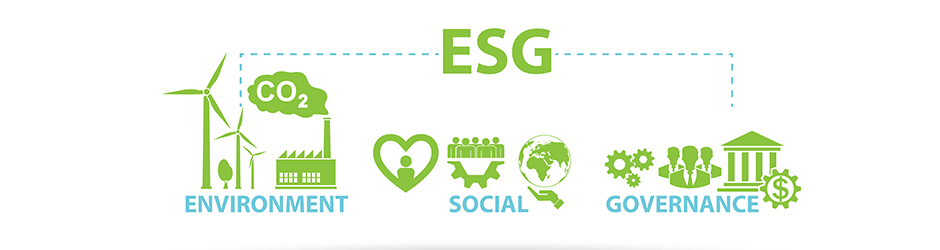
Sustainable finance consequently refers to the systematic integration of environmental, social and governance (ESG) factors into financial decision-making processes. In practice, this means taking these factors into account in risk management as well as investment and lending decisions in order to finance economically, socially and environmentally sustainable activities and projects. The financial sector has the opportunity to respond to social and environmental challenges because it provides capital. Financial institutions can thus exert an expert and positive influence on companies and other stakeholders. In addition, they thereby support government efforts and, as a result, the building of a more socially and environmentally sustainable economy.
How does a Sustainable Finance strategy look like?
A Sustainable Finance strategy is composed of profit motive and sustainable aspects. Four aspects are considered in sustainable finance decision making: financial results, governance processes, social performance, and environmental performance. Accordingly, all financing decisions support socially, environmentally and economically sustainable economic activities and projects. This is done by considering the above four aspects.
All Sustainable Finance decisions must take into account the expected returns and the risks associated with achieving those returns. Governance refers to the systems, processes and oversight that ensure that an organization and its products achieve their financial, social and environmental objectives and provide assurance to stakeholders that these objectives will be met.

"Social and green bonds"
Investments with a positive social impact are referred to as such when they have a positive impact on individuals, communities and society as a whole. An example is investing in companies and projects that value gender equality or progressive working conditions. Investments that have a positive impact on the environment are often referred to as green bonds. Examples include investments in climate change mitigation, investments in adaptation to the physical impacts of climate change, and investments in biodiversity conservation.
Reference is made here to initiatives aimed at reducing greenhouse gas emissions (climate change mitigation). Examples include renewable energy, energy efficiency, green buildings, clean transportation, and forest conservation.
Initiatives regarding to climate change adaptation also play a relevant role. They deal with the adaptation of the economy and society to the unavoidable physical consequences of climate change. Examples include: urban infrastructure, climate-resilient agriculture, climate-smart agribusiness value chains, and information support systems.
In parallel, initiatives to address other environmental issues (apart from climate change) also have the opportunity to have an impact. Examples include biodiversity conservation or pollution prevention and control.
Future of Sustainable Finance
Despite the interest, the successes already prescribed, and the corresponding clear need for a sustainable finance sector, crucial progress is being held back due to a lack of consensus. Which companies are "green" and which projects or activities are considered sustainable is not clearly defined. There is a lack of a clear definitional framework here.
Nevertheless, it is crucial for companies to address the issues of sustainable finance and ESG criteria as early as possible, because the goals of the European Union are set. Conversely, non-sustainable business practices are a discontinued model that will soon become obsolete and thus show little profitability in the long term.
The financial services provider Bloomberg states that by 2025, ESG assets will exceed $53 trillion. This forecast is promising and clearly shows the immense importance that sustainable finance will have in the future.